App Store template
glitchtip icon

glitchtip

Track application errors, performance, and uptime with GlitchTip on Sealos. Connect Sentry-compatible SDKs and investigate failures in a self-hosted dashboard.

Launch in your Sealos workspace.

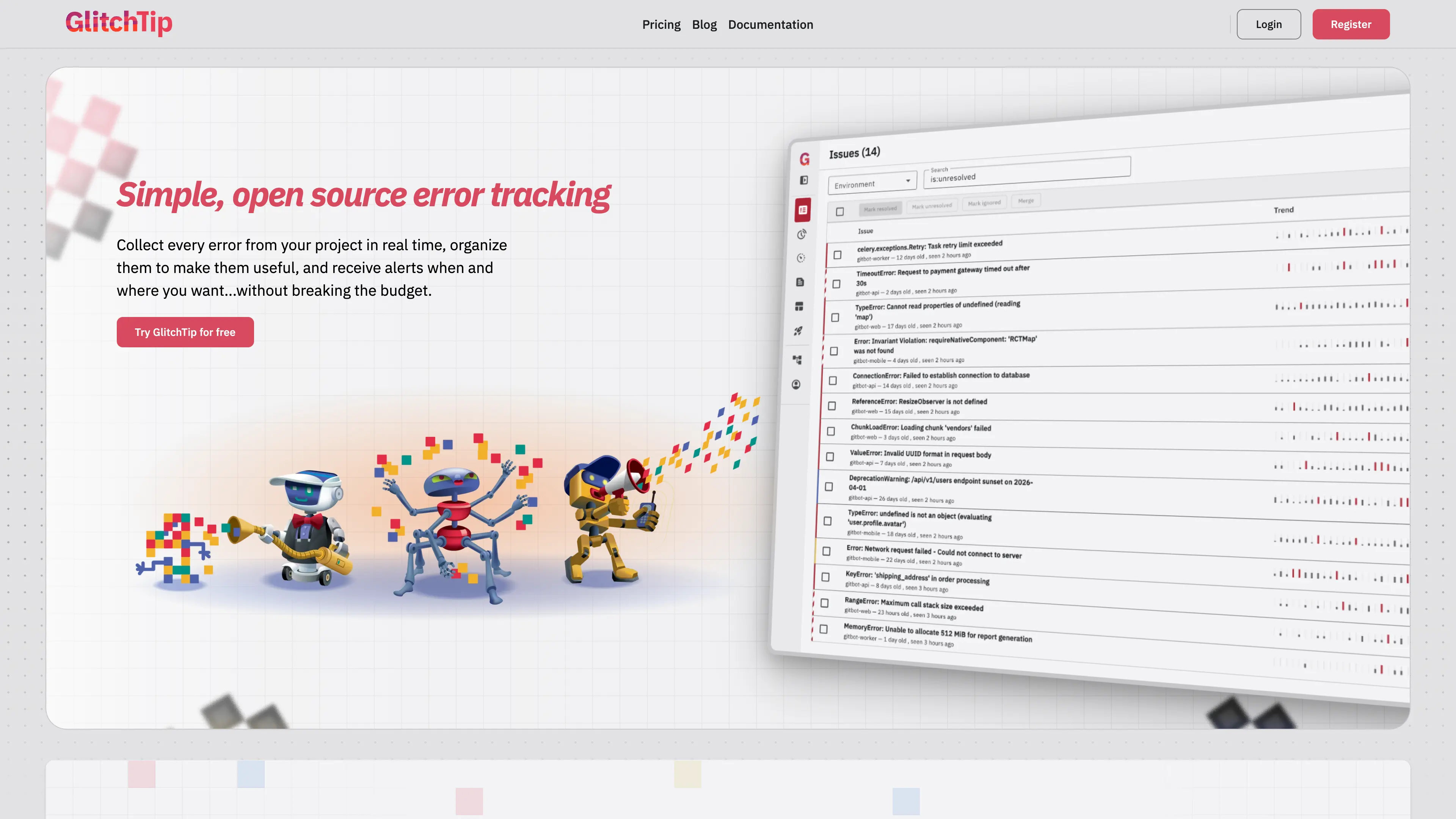
glitchtip template preview
Template previewFull screenshot
Template deployments
12 on Sealos
Deployment
Your own instance
Category
Monitoring

About this template

Overview

Track application errors, performance, and uptime with GlitchTip on Sealos. Connect Sentry-compatible SDKs and investigate failures in a self-hosted dashboard.

How to deploy glitchtip

  1. Choose Deploy now to start glitchtip in your Sealos workspace.
  2. Review EMAIL_ENABLE, EMAIL_URL, DEFAULT_FROM_EMAIL in the deployment form.
  3. Launch the template, then inspect the application status and resource cards in Canvas.

Resources to plan for

Start with the resources defined by the glitchtip template. Review CPU, memory, persistent storage, and network allocations for every service in Canvas. Capacity needs depend on your data and workload; monitor usage as they grow.

Template configuration and setup

Access after deployment

Use the application URL or connection details shown in Canvas. Follow the deployment guide for first-time account setup or client configuration, and keep generated credentials available for that step.

Hosting and billing

Sealos monthly plans include compute, memory, storage, and traffic. Size your plan for all deployed services. Software licenses and external AI or API services may have separate terms and charges. Confirm the applicable plan and optional charges in Cost Center.

Compare Sealos resource plans
Read full documentationCollapse documentation

For current cloud charges, refer to Sealos plan pricing. Upstream documentation may reference earlier billing models.

glitchtip

Overview

GlitchTip makes monitoring software easy.

This Sealos template deploys glitchtip as the glitchtip application. It uses the repository-maintained Sealos manifest and keeps deployment, networking, and storage configuration inside the template.

Deploy on Sealos

Open this template in the Sealos App Store, review the configuration values, and click Deploy. Sealos renders the template variables, creates the required Kubernetes resources, and manages the public endpoint for the application.

Access

After deployment, open https://${{ defaults.app_host }}.${{ SEALOS_CLOUD_DOMAIN }}. The concrete hostname is generated from defaults.app_host and your Sealos Cloud domain.

Configuration

The following user-facing inputs are available during deployment:

NameDescriptionRequiredDefault
DEFAULT_FROM_EMAILDefault from email addresstrue``
EMAIL_ENABLEcheck if you want to enable emailfalsefalse
EMAIL_URLSMTP stringtrue``

Keep sensitive values in Sealos-managed inputs or generated defaults. Do not commit private credentials to the template repository.

Official Links

From launch to everyday operations

Why deploy
on Sealos

A shorter path from an app you want to an app you can run. Sealos brings deployment and ongoing operations into one place.

  1. One-click deployment

    Start with a ready-made template. Review its configuration and launch from the Sealos console.

  2. Managed Kubernetes

    Run on managed infrastructure with built-in workload scheduling and recovery.

  3. Automatic HTTPS

    Give your application a public HTTPS endpoint with certificates managed for you.

  4. Persistent storage

    Keep application data on persistent volumes across container restarts.

  5. Room to grow

    Adjust CPU, memory, and replicas from the console as your workload changes.

One template. Connected resources.

You Get the Whole Stack

Sealos provisions the resources defined by your template and brings them together in your workspace.

  • App Service

    Container workloads with configurable CPU, memory, and replicas.

  • Public HTTPS URL

    An address for your app, with managed TLS certificates.

  • Database

    A database provisioned alongside your app when the template calls for one.

  • Persistent Volume

    Storage for the files and data your application needs to keep.

  • Environment Variables

    Application settings and secrets configured in one place.

  • Logs & Metrics

    Inspect container logs and resource usage from the console.

Resources and their configuration vary by template. Review the deployment form for this app’s exact setup.

Explore more production-ready templates.

More