sealos.io
AFFiNE
Build production-ready tools templates with Sealos.
https://affine.pro/deploy now
AFFiNE
Tools
A privacy-focused, local-first, open-source workspace for notes, docs, whiteboards, and team knowledge management.
Authentik is an open-source identity provider focused on flexibility and versatility.
Launch in your Sealos workspace.
Start with the resources defined by the Authentik template. Review CPU, memory, persistent storage, and network allocations for every service in Canvas. Capacity needs depend on your data and workload; monitor usage as they grow.
Template configuration and setupUse the application URL or connection details shown in Canvas. Follow the deployment guide for first-time account setup or client configuration, and keep generated credentials available for that step.
Sealos monthly plans include compute, memory, storage, and traffic. Size your plan for all deployed services. Software licenses and external AI or API services may have separate terms and charges. Confirm the applicable plan and optional charges in Cost Center.
Compare Sealos resource plansFor current cloud charges, refer to Sealos plan pricing. Upstream documentation may reference earlier billing models.
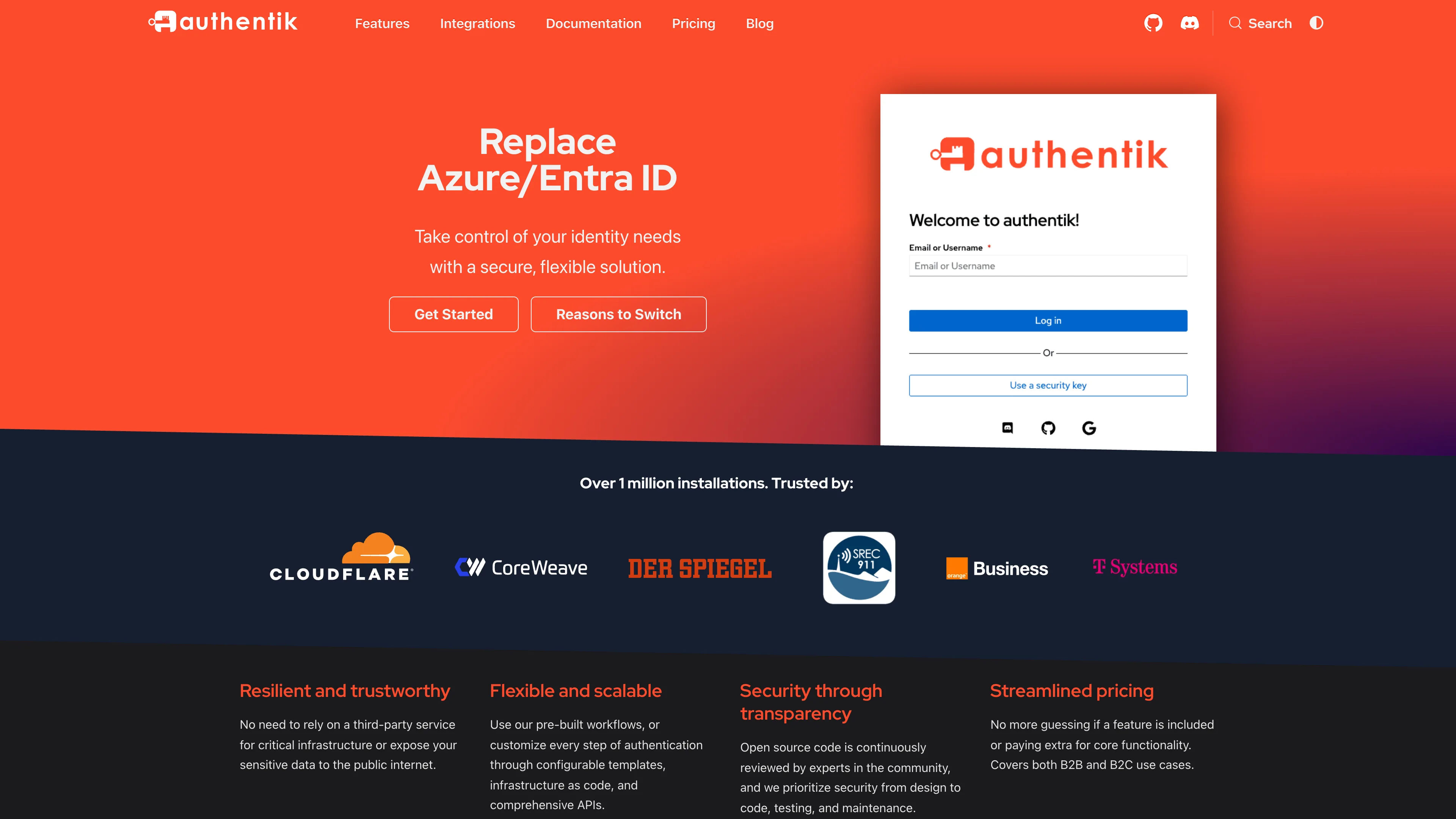
Authentik is an open-source identity provider and access management platform. This template deploys Authentik with a dedicated worker and managed PostgreSQL backend on Sealos Cloud.
Authentik provides centralized authentication, single sign-on (SSO), policy-based access control, and identity lifecycle management. It supports modern protocols such as OIDC and SAML, making it suitable for self-hosted applications and internal platforms.
This Sealos template deploys Authentik as a multi-service stack: a primary server for web/API traffic, a background worker for asynchronous tasks, and a PostgreSQL cluster for persistent data. It also provisions HTTPS ingress and persistent volumes for runtime data.
After deployment, you get a public URL with TLS and can complete the initial setup wizard in the browser. Ongoing operations can be managed through Canvas with AI dialog updates or resource-card edits.
The Sealos template includes all required dependencies: Authentik server, Authentik worker, PostgreSQL database, ingress, and persistent storage.
This template deploys the following resources:
ghcr.io/goauthentik/server:2025.12.3 with server mode, serves web UI/API on port 9000, and exposes 9443 internally.worker mode to process background and scheduled jobs.16.4.0 with persistent storage and secret-based credentials.authentik database if it does not exist.enable_external_files is enabled. The default keeps the local /data and /templates volumes.| Component | CPU Request | CPU Limit | Memory Request | Memory Limit | Storage |
|---|---|---|---|---|---|
| Authentik Server | 20m | 200m | 51Mi | 512Mi | /data 1Gi, /templates 1Gi |
| Authentik Worker | 20m | 200m | 51Mi | 512Mi | /data 1Gi, /certs 1Gi, /templates 1Gi |
| PostgreSQL | 50m | 500m | 51Mi | 512Mi | data 1Gi |
At deploy time, the template uses these primary parameters:
app_host: Public hostname prefix used by Ingress.app_name: Resource naming prefix for this deployment.authentik_secret_key: Runtime secret key (auto-generated by default).enable_external_files: Enable a Sealos S3-compatible bucket for Authentik media and uploaded files. The default is false.Database host, port, username, and password are injected from generated Kubernetes secrets. The Authentik server and worker both use the same PostgreSQL backend and secret key for consistent runtime behavior.
Authentik is open source with upstream licensing terms maintained by the project. Refer to the Authentik LICENSE for current details.
Sealos is an AI-assisted Cloud Operating System built on Kubernetes that simplifies application delivery from deployment to operations. By deploying Authentik on Sealos, you get:
Deploy Authentik on Sealos and focus on identity architecture instead of infrastructure plumbing.
enable_external_files: Set to true to create the optional private Sealos S3-compatible bucket for media and uploaded files./if/flow/initial-setup/, and create your first administrator account./if/flow/default-authentication-flow/ and open the Admin interface to manage providers and applications.After deployment, you can configure Authentik through:
Typical post-deploy setup tasks include:
To scale runtime capacity:
For most installations, vertical scaling is the first step. If you need horizontal scale, adjust architecture settings based on your workload and upstream Authentik guidance.
Issue: Initial setup page is unavailable
Issue: Database connection errors on startup
Issue: Worker reports healthcheck failures
AUTHENTIK_SECRET_KEY and PostgreSQL credentials, then restart the worker pod.Issue: Cannot reach Authentik over HTTPS
This Sealos template follows repository licensing terms. Authentik itself follows upstream licensing; refer to the official repository for current license details.
A shorter path from an app you want to an app you can run. Sealos brings deployment and ongoing operations into one place.
Start with a ready-made template. Review its configuration and launch from the Sealos console.
Run on managed infrastructure with built-in workload scheduling and recovery.
Give your application a public HTTPS endpoint with certificates managed for you.
Keep application data on persistent volumes across container restarts.
Adjust CPU, memory, and replicas from the console as your workload changes.
Sealos provisions the resources defined by your template and brings them together in your workspace.
Container workloads with configurable CPU, memory, and replicas.
An address for your app, with managed TLS certificates.
A database provisioned alongside your app when the template calls for one.
Storage for the files and data your application needs to keep.
Application settings and secrets configured in one place.
Inspect container logs and resource usage from the console.
Resources and their configuration vary by template. Review the deployment form for this app’s exact setup.
Explore more production-ready templates.
Build production-ready tools templates with Sealos.
A privacy-focused, local-first, open-source workspace for notes, docs, whiteboards, and team knowledge management.
Build production-ready tools templates with Sealos.

Google Chrome browser running in a LinuxServer.io Selkies container with a web-based desktop UI.
Build production-ready tools templates with Sealos.
Deploy the self-hosted DeeplX translation API on Sealos and connect applications to its HTTP endpoint. This independent gateway integrates with DeepL translation.